Embarking on the journey of Crafting Unique Orc Names Manually: Principles and Examples is more than just picking a cool-sounding word; it's about delving into the heart of a culture forged in fire and fury, superstition and strength. Whether you're a Dungeon Master bringing a warband to life, a writer shaping a formidable protagonist, or a player forging a character with true Orcish grit, a name crafted with intent resonates far deeper than one plucked at random. You're not just assigning letters; you're echoing a primal roar, a whispered prayer, or a battlefield decree.
The best names aren't just labels; they're declarations. They hint at origin, prophesy deeds, and embody the very essence of the character they represent. And for Orcs, a people whose history is etched not in books but in the scars of battle and the guttural cadence of their spoken tongue, this truth is paramount.
At a Glance: Forging Orcish Identity Through Names
- Understanding the Lore: Orc names are rooted in a culture of warfare, primal spirituality, and simple, guttural communication.
- Sound is King: Focus on hard consonants (G, K, R, Z, Th) and short, impactful vowels for authenticity.
- Syllable Simplicity: Most names are 1-3 syllables, reflecting their quick, battlefield-ready language.
- Gendered Nuances: Male names often feature harsher sounds (Us, Zs, Ts, Gs); female names can incorporate softer sounds (As, Ms, Ss, Es) while retaining strength.
- Beyond the Name: Epithets (titles like "Skull Cleaver") are crucial for tribal Orcs, while outsiders might adopt more descriptive nicknames.
- Context Matters: Consider the Orc's origin (e.g., D&D, Warcraft, Elder Scrolls) to inform naming style.
- Avoid Pitfalls: Steer clear of overly complex, silly, or lore-clashing names.
Beyond the Blade: Understanding the Orcish Soul (and its Naming Conventions)
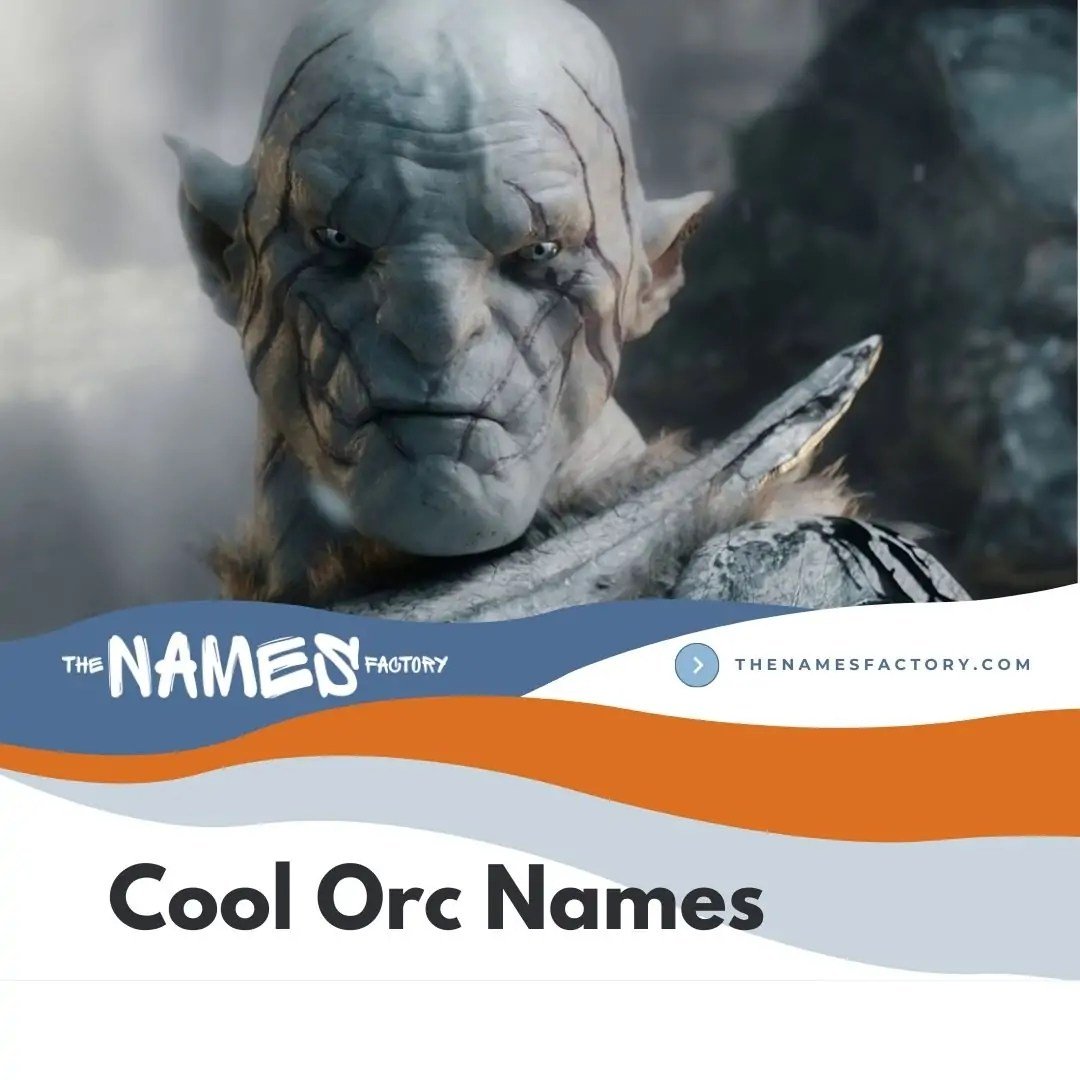
To truly craft an authentic Orc name, you must first understand the spirit of the Orc. In the realms of fantasy, Orcs are often depicted as more than mere monsters; they are a people. Dungeons & Dragons, for instance, offers varied interpretations. Volo's Guide to Monsters paints them as grey-skinned, burly, and born for bloodshed under the shadow of Gruumsh. They are deeply religious, loyal to war gods like Gruumsh, fear gods like Yurtrus and Shargaas (for the elderly), and revere Luthic, the sole goddess of life and grave. This religious fervor infuses their warbands with a potent superstition.
However, newer takes, like those in Eberron: Rising from the Last War or Explorer’s Guide to Wildemount, present Orcs with a more primal, almost druidic nature, independent of malevolent gods. These Orcs might be thoughtful shamans or powerful guardians of the wild. This distinction is vital: are you naming an Orc of raw, Gruumsh-fueled savagery, or one of quiet, ancestral power? Your naming principles will shift accordingly.
Regardless of their specific flavor, a few truths about Orcish communication remain consistent. They possess no written language beyond crude symbols. Their spoken tongue is guttural, growly, and focused on quick, efficient words, especially valuable for shouts across a chaotic battlefield. This linguistic foundation is the bedrock of their naming conventions: simple, impactful, and rarely more than three syllables.
The Raw Materials: Sounds, Syllables, and Structure
Think of building an Orc name like forging a weapon. You need the right metals, the right heat, and a clear vision. For Orcs, the "metals" are specific sounds, and the "heat" is the cultural context.
Guttural Gravitas: The Core Orcish Sound
Orc names demand a certain sonic texture. They should feel impactful, a bit rough around the edges, and resonate with a primal force. This is achieved primarily through the strategic use of consonants.
- Hard Consonants: These are your bread and butter. Think:
- G: Grog, Garrosh, Grish
- K: Karg, Krak, Krosh
- R: Ragnor, Rark, Raguk
- Z: Zog, Zurg, Zark
- Th: Throk, Thrak, Thurg
- S: Snarl, Skrag, Skarn
- T: Trak, Targ, Thrakk
- Ch/J: (Less common but can add punch) Chug, Jarg
- Vowels with Punch: While not as dominant as consonants, the right vowels amplify the guttural feel. Short, open vowel sounds are often most effective:
- Short 'a' (as in "cat"): Kragg, Ragnarr
- Short 'o' (as in "got"): Grom, Zog
- Short 'u' (as in "but"): Murg, Lug
- Sometimes 'e' (as in "bed") for a slightly sharper edge: Skeg
Avoid overly soft vowels (like long 'i' or 'e') or complex diphthongs, which tend to sound less Orcish and more elven or human.
Syllable Strategy: Short and Sharp
Orc names are efficient. They don't waste breath. This translates directly into their typical length:
- 1-3 Syllables: This range ensures the name is quick to shout, easy to remember, and reflects a language built for immediate communication.
- Monosyllabic: Grom, Throk, Snarl, Karg (Very common, very impactful)
- Disyllabic: Garrosh, Gul'dan, Nazgûl, Murgash (Adds a bit more complexity without losing punch)
- Trisyllabic: Ragnaros, Grishnak, Urgulak (Less common for core names, often reserved for more significant figures or combined with epithets).
Basic Structure: Consonant-Vowel (CV) and Beyond
Most Orc names follow straightforward phonetic patterns that prioritize impact.
- CV (Consonant-Vowel): Go, Za, Ru (Often combined with other sounds)
- VC (Vowel-Consonant): Ug, Og, Ar
- CVC (Consonant-Vowel-Consonant): The most common and effective pattern. Gor, Thrak, Murg, Kruk. This structure naturally creates short, powerful sounds.
- CCVC/CVCC (Clusters): Adding consonant clusters at the beginning or end can enhance ferocity. Skarg, Grunt, Klarg, Snaga.
Example Combinations: - Start with a hard consonant: G, K, R, S, T, Z
- Add a short vowel: a, o, u, e
- End with another hard consonant or cluster: g, k, r, sh, t, z, gh
- G+o+r = Gor
- T+hr+a+k = Thrak
- M+u+rg = Murg
- S+n+a+g = Snag
Gendered Echoes: Crafting Distinct Male and Female Names
While the core principles of guttural sounds and short syllables apply to all Orc names, there are subtle distinctions that lend authenticity to gender-specific naming.
Male Names: The Roar of Battle
Male Orc names frequently lean into the most aggressive and impactful sounds. They often use a higher concentration of the "hardest" consonants, emphasizing brute strength and a warlike nature.
- Dominant Sounds: Us, Zs, Ts, Gs (especially at the beginning or end).
- Examples:
- Grog
- Thrak
- Zug
- Durza
- Karg
- Snarl
- Varok
- Grumsh (as in the god himself)
Think of names that feel like a punch or a guttural shout. They should convey an immediate sense of power and a readiness for combat.
Female Names: Strength in Subtlety (and Ferocity)
Female Orc names, while equally strong, often incorporate a slightly broader range of sounds, occasionally tempering the extreme harshness with a touch more fluidity. They still retain that essential Orcish impact, but perhaps with a different cadence, reflecting roles beyond pure front-line combat, such as shamans, huntresses, or caretakers (influenced by figures like Luthic, the life-giver and grave-keeper).
- Dominant Sounds: While still using hard consonants, they can also lean into As, Ms, Ss, and Es, giving a slightly less clipped sound.
- Examples:
- Gara
- Urzag
- Narga
- Grisha
- Luthic (the goddess herself provides a great example)
- Sharra
- Karna
- Draka
A good female Orc name might feel like a deep growl rather than a sharp bark – powerful, resonant, and often implying a grounded, enduring strength.
Beyond the Basics: Adding Layers of Lore and Persona
A truly unique Orc name goes beyond just sounding right; it tells a story. Integrating elements of their specific origin, deeds, or personality elevates a simple name into a memorable character identifier.
Tribal Whispers: Reflecting Origin (D&D, Warcraft, Elder Scrolls)
Different fantasy settings infuse Orcs with distinct cultural flavors, and these flavors should subtly influence your naming choices.
- D&D Style (Forgotten Realms, Eberron):
- Flavor: Often tribal, savage, and heavily influenced by Gruumsh (or primal nature for Eberron/Wildemount). Simplicity and directness are key.
- Characteristics: Monosyllabic or disyllabic, emphasizing raw strength. Less emphasis on complex clan names.
- Examples: Grak, Thokk, Muzgash, Krot, Nazgul, Borga, Shara.
- Nuance: For Eberron/Wildemount Orcs, names might reflect natural elements or primal sounds more overtly, perhaps with fewer harsh 'k' and 'z' sounds and more 'r's and 'm's.
- Warcraft-Style (Azeroth):
- Flavor: Reflects clan identity (Warsong, Frostwolf), honor, and shamanistic traditions. Often strong, single words.
- Characteristics: Names often have a strong consonant beginning and can end in consonants. Clan names are crucial.
- Examples: Thrall, Grom Hellscream, Garrosh Hellscream, Durotan, Orgrim Doomhammer, Nazgrim. (Notice the common use of a single, strong first name followed by an epithet/clan name).
- Prefixes/Suffixes: Sometimes uses shared prefixes or suffixes within a clan, but less rigidly than Elder Scrolls.
- Elder Scrolls-Style (Orsimer):
- Flavor: Associated with strongholds, smithing, and Malacath worship. Names often imply lineage or stronghold.
- Characteristics: A common convention is a gendered prefix followed by a core name, often indicating "son/daughter of."
- Males: Often start with Gro- (e.g., Gro-Durbug, Gro-Krul, Gro-Bagul).
- Females: Often start with Gra- (e.g., Gra-Murzog, Gra-Shug, Gra-Rogg).
- Examples: Garakh gro-Molog, Umug gro-Lag, Sharn gra-Bagol.
- Other Flavors (Mountain Clan, Swamp Clan, Fel Orc, Savage/Tribal):
- Mountain Clan: Names might incorporate sounds evoking jagged peaks, strength, or stoicism. (e.g., Stone-Grasp, Crag-Tooth, Kaelar)
- Swamp Clan: Names could be muddier, sibilant, or reflect lurking danger. (e.g., Mire-Shank, Sludge-Tongue, Zorr’ak)
- Fel Orc: More demonic, twisted sounds. Perhaps harsher, sharper, or more guttural than usual, possibly incorporating sounds like 'zz', 'sk', 'iz', 'gor'. (e.g., Skraggor, Gul'dan, Gorefiend)
- Savage/Tribal: Emphasize raw, untamed sounds, very close to the D&D style.
The Power of the Epithet: Earning Your Legend
For tribal Orcs, particularly those focused on warfare, their birth name is often just a starting point. True identity is forged in battle and declared through an earned epithet. These aren't just titles; they are earned descriptions of exceptional performance or defining characteristics.
- What they are: Titles in common language (or a common tongue translation) that describe a deed, skill, or notable feature.
- How they're earned: Through great acts in battle, displays of strength, or unique talents.
- Manual Creation:
- Identify a defining trait or deed: Is your Orc a powerful warrior, a cunning shaman, a brutal hunter, or known for a specific weapon?
- Use impactful common words: "Skull," "Bone," "Blood," "Iron," "Stone," "Doom," "Rage," "Cleaver," "Hammer," "Fang," "Smasher," "Bringer," "Gore."
- Combine them:
- Karg "Skull-Splitter" (deed)
- Borga "Iron-Hide" (characteristic)
- Throk "Doom-Bringer" (reputation/role)
- Shara "Gore-Feaster" (brutality)
Epithets are essential for many traditional Orcs, giving depth to their character beyond a simple guttural sound. They show that names aren't static but evolve with an Orc's legacy.
The Outsider's Echo: Names of Compassion and Choice
Not all Orcs are raised in the brutal warbands. Orcs raised outside their tribes, exposed to other cultures, often develop compassion and demonstrate that they are not inherently evil. These Orcs, especially those from settings like Eberron, might adopt names or titles that reflect their unique journey or chosen identity.
- Common Language Names: They might take on names from the culture that raised them, or choose names that simply sound good to them from common tongue.
- Descriptive Nicknames: Similar to epithets, but perhaps more focused on their new life, skills, or personality traits as perceived by others.
- Urgul "The Quiet" (for a thoughtful Orc)
- Gara "Bright-Axe" (for an Orc who joined a heroic company)
- Thrak "Of the Forest" (for a druidic Orc raised by elves)
This offers flexibility and a chance to show an Orc's individual journey, distinguishing them from the monolithic tribal stereotype.
Your Manual Workshop: A Step-by-Step Naming Process
Ready to craft your own unique Orc name? Here’s a practical, step-by-step guide to get you started.
Step 1: Define Your Orc's Core Identity
Before you even think about sounds, understand who your Orc is.
- Origin: Which fantasy setting? (D&D Gruumsh-Orc, Eberron Primal Orc, Warcraft Orc, Elder Scrolls Orsimer?) This dictates many stylistic choices.
- Personality: Are they brutish and direct, cunning and tactical, stoic and shamanistic, or surprisingly compassionate?
- Role: Warrior, shaman, scout, blacksmith, outcast?
- Alignment (if applicable): Chaotic Evil, Neutral, Chaotic Good? (An Orc raised by humans might have a vastly different moral compass than a typical warband member).
- Key Traits: What stands out about them? Their strength, intelligence, ferocity, wisdom?
Step 2: Brainstorm Core Sounds
Based on your Orc's identity and the general principles, list out the dominant sounds you want to use.
- Hard Consonants: G, K, R, Z, T, Th, S (Choose 3-5 that feel right).
- Vowels: A (short), O (short), U (short).
- Starting Sounds: Which consonants feel most impactful to start the name?
- Ending Sounds: Which feel powerful to conclude it?
Example: For a D&D Gruumsh warrior: G, R, K, T, Z, short A/O/U. Starting G/K/T, ending K/G/R.
Step 3: Experiment with Syllables
Start combining your chosen sounds into 1-3 syllable clusters. Don't censor yourself; just write down everything that sounds remotely Orcish.
- CVC (Consonant-Vowel-Consonant): Gor, Kruk, Thrak, Murz, Zar
- CV-C: Ga-rok, Mo-guk, Za-rak
- CCV-C/CV-CC: Skrag, Grunt, Dur-nag
Example Brainstorm: Grak, Korg, Throk, Zurg, Gruz, Murg, Trak, Rung, Karg, Skarn, Grash, Thorg, Borak, Durnag, Gro-nak.
Step 4: Layer in Lore/Theme
Now, refine your list by applying the cultural nuances from Step 1.
- Gender: Adjust sounds for male or female (more aggressive for males, potentially slightly softer/more resonant for females).
- Setting-Specifics:
- For Elder Scrolls: Add
Gro-orGra-if appropriate. - For Warcraft: Think strong, single words.
- For an Eberron Shaman: Maybe sounds are slightly less harsh, more earthy, like Roga, Urza, Narok.
- Personality Hints: Does the name sound quick for a scout, or heavy for a brute?
- Add an Epithet: Brainstorm 2-3 potential epithets based on your Orc's defining trait or a likely deed.
Example Refinement (Male D&D Warrior): - From: Grak, Korg, Throk, Zurg, Gruz, Murg, Trak, Rung, Karg, Skarn, Grash, Thorg, Borak, Durnag, Gro-nak.
- Refined: Karg, Throk, Borak, Durnag.
- Epithet idea: "Skull-Breaker," "Iron-Fist," "Blood-Axe."
Step 5: Test and Refine
This is crucial.
- Pronounce it Aloud: Does it roll off the tongue? Does it sound right?
- Memorability: Is it easy to remember and say?
- Avoid Pitfalls: Does it sound unintentionally silly? Does it clash with the lore of your specific setting?
- Meaning (Optional): While Orcs don't have complex written language, does the feel of the name hint at something? "Throk" feels weighty, "Skarn" feels sharp.
- Combine: Try your base name with a chosen epithet. Karg Blood-Axe. Durnag Iron-Fist.
You might go back and forth between steps several times. That's part of the crafting process!
Common Pitfalls to Avoid When Forging Orcish Names
Even with a solid framework, it's easy to stumble. Keep an eye out for these common missteps:
- Too Complex or Unpronounceable: Remember, Orc language is guttural and quick. Names like "Xyloranthius" or "Pthagnar" simply don't fit. Stick to 1-3 syllables and straightforward phonetic structures.
- Clashing with Lore: Naming a D&D Orc "Legolas" or "Gandalf" would be jarring. Ensure your name aligns with the specific fantasy universe and the Orcish culture within it. An Elder Scrolls Orc isn't typically named "Grognak" without the "Gro-" prefix.
- Unintentionally Silly: While some fantasy elements can be humorous, an Orc name like "Snugglepuss" or "Bobblywobble" undermines the character's gravitas. Always pronounce it aloud and consider the tone.
- Forgetting Epithets for Tribal Orcs: If your Orc is from a traditional warband, a simple birth name without an earned title can feel incomplete. The epithet is often more important than the given name.
- Settling for Generic Names: The goal is unique names. While "Grak" is fine, push for something that, while still Orcish, feels a bit more distinct for your character. Maybe it's "Grak Bloodtooth" or "Grask," a subtle twist.
Why Manual Crafting Matters (Even with Generators Around)
In our digital age, the allure of an instant Orc name generator is strong. These AI-powered tools, often trained on vast amounts of fantasy lore, can quickly churn out thematic, unique, and evocative names. They save time, spark creativity, and are fantastic for quick NPCs or when you're simply stuck.
However, manually crafting a name offers a profound depth that a generator, no matter how sophisticated, can't fully replicate. When you meticulously choose each sound, consider each syllable, and weave in specific lore details, you forge a name that is intrinsically linked to your unique character. This process:
- Offers Unparalleled Control: Every phonetic choice, every thematic element, is intentional.
- Creates Deeper Character Connection: The act of building the name yourself invests you more deeply in the character's identity.
- Ensures Nuanced Lore Integration: You can subtly inject very specific cultural or personal details that an algorithm might miss.
- Sparks Organic Creativity: The constraints of manual crafting often force you to think more creatively about how sounds and meanings intertwine.
For the most pivotal characters—your player characters, major NPCs, or a novel's protagonist—the manual path offers a richer, more meaningful naming experience.
Forging Your Own Path
Crafting unique Orc names manually is a skill, and like any skill, it improves with practice. Don't be afraid to experiment. Keep a notebook of interesting sounds, consonant clusters, and potential epithets. Look at existing Orc names from your favorite fantasy settings and try to reverse-engineer their principles.
The name you bestow upon your Orc is a piece of their soul. It’s their declaration to the world, a glimpse into their origins, and a hint at their destiny. By understanding the raw guttural language, the cultural influences, and the simple yet profound naming structures, you can move beyond generic labels and forge names that truly resonate with the fearsome, complex spirit of the Orc. Go forth, chieftain, and let your characters roar with names worthy of legend!